Latvia is one of the most forested countries in Europe, and Lithuania also has large forests. Birch, pine and spruce — the three trees the fly agaric (Amanita muscaria) lives with — cover a large part of the land. That makes the Baltic region one of the richest places in Europe for wild Amanita.
The forest and the tree partners
Amanita muscaria is a mycorrhizal mushroom: it grows in partnership with tree roots and cannot be cultivated on a farm. Every fly agaric you see in our shop was therefore collected in the wild, under birch, pine or spruce, in Baltic forests.
The season
In the Baltics the fly agaric fruits from August to October, with the peak usually in September. Young caps appear first as white “eggs” covered by the universal veil, then open into the classic red cap with white warts.
From forest to pack
- Collection — caps are picked in the wild during the season.
- Cleaning — forest debris is removed.
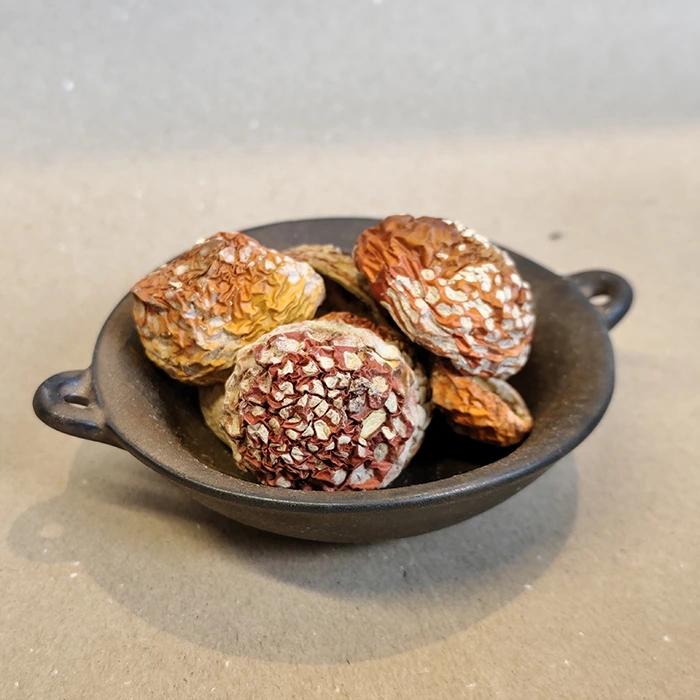
- Drying — caps are dried whole until they are stable for storage.
- Sorting — dried caps are graded as Premium+ (unopened), Grade A (whole) or Grade B (broken). What the grades mean.
- Packing — sealed bags, labelled with species and weight.
Baltic fly agaric vs other origins
Fly agaric grows across the Northern Hemisphere, but caps from different regions can differ in size and colour. Baltic caps are typically medium-sized and deep red. What matters most to buyers is a clear species label, an honest grade and careful drying.
Safety
Amanita muscaria is poisonous. Our products are sold as botanical collectibles for display and study only — not for consumption.