Short answer: yes. The fly agaric is a poisonous mushroom, and so are the panther cap and the royal fly agaric. Here are the facts.
The compounds
The main active compounds of Amanita muscaria are ibotenic acid and muscimol. Both act on the central nervous system. Their concentration varies widely between mushrooms, regions, seasons and even parts of the same cap, which is one reason poisoning is unpredictable. Despite its name, the fly agaric contains only traces of muscarine.
How poisoning shows
Symptoms usually start within 30 minutes to 3 hours and can include nausea, vomiting, dizziness, confusion, agitation, drowsiness and loss of coordination. Severe cases need hospital care. Deaths are rare but have been reported, especially with the panther cap, which typically contains more of these compounds.
What to do in an emergency
If someone has eaten a wild mushroom and feels unwell, contact your local emergency number or poison control centre immediately. If possible, keep a sample of the mushroom for identification.
Why we sell it anyway
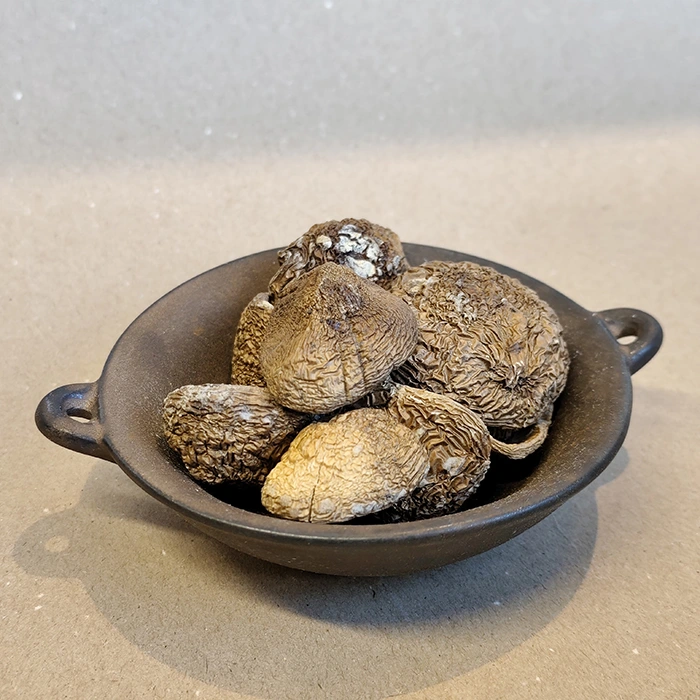
Like many poisonous plants, Amanita has a long history in culture, folklore and decoration. We sell dried Amanita as a botanical collectible for display and study only — with clear species labels, no usage or dosage instructions, and a clear warning on every product.
Keep dried mushrooms away from children and pets.