No other mushroom is as instantly recognisable as the red-and-white fly agaric. It appears in fairy-tale books, Christmas decorations, garden ornaments and video games. Here is a short tour of its cultural history.
The name: “fly” agaric
The English name, the German Fliegenpilz and the Latin muscaria (from musca, fly) all point to an old European practice: pieces of the mushroom were placed in a saucer of milk to attract and stun flies.
Siberia and the North
Ethnographers of the 18th and 19th centuries recorded the fly agaric in the traditions of several peoples of Siberia and the Russian Far East, often connected with shamans and with reindeer, which are known to seek out the mushroom.
Christmas imagery
In Central and Northern Europe the fly agaric is a traditional symbol of good luck and appears on Christmas cards and as glass tree ornaments. Some writers link Santa Claus’s red-and-white outfit to the mushroom — a popular but debated theory.
Fairy tales and illustration
Victorian and later illustrators made the red cap with white spots the archetypal “toadstool” of gnomes and fairies — the image most people picture when they hear the word mushroom.
A beautiful but poisonous mushroom
Despite its friendly image, the fly agaric is poisonous and should never be eaten.
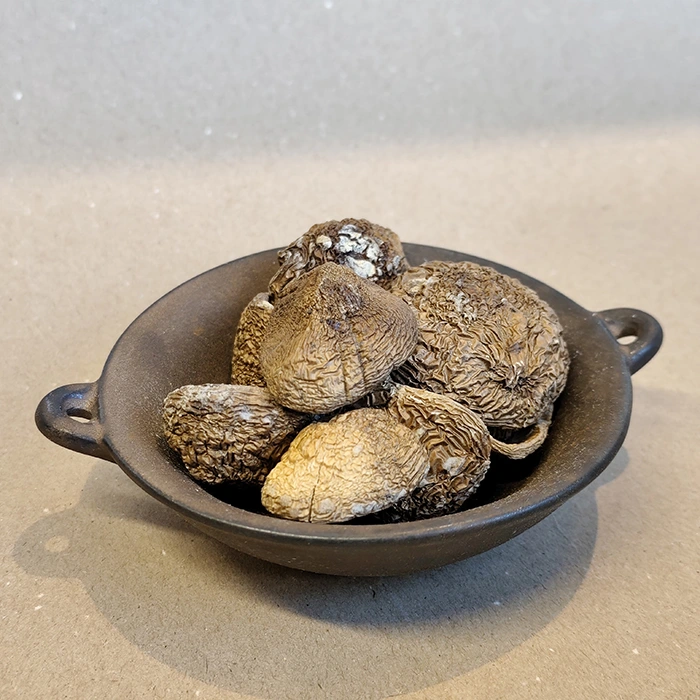
See our wild Baltic fly agaric — sold as a botanical collectible for display.